
Hi guys
Before I begin, I must apologise for the massive delay in getting this one out to you.
But as you will have noticed over the past year (since last September) I've been pre-occupied with the podcast's schedule, meaning that unfortunately the Blog's had to suffer as a consequence.
Annoyingly just when I found time to start writing again... I fell ill over Christmas, unexpectedly stopping my plans to work on (and complete) this blog post.
But I can assure you all, that I'm desperately trying to rectify the situation, by getting myself gently 'back on track'.
Firstly by successfully finishing this blog post (and releasing it)... even if it isn't quite how I intended it (two parts). Before moving swiftly onto my next blog post, which I know will get a lot of you excited. As it'll be a continuation of one of my most successful blog posts (my Origins of famous Starfleet ship names blog post).
As I'm sure you can tell from the title, this blog post's going to be a continuation from my Anne Frank General Interest blog post. Acting like an epilogue for it, and my accompanying General Interest podcast (featuring in the blog post's second part).
I'm hoping it'll give you some more insight into who I am, through the people I'm going to be talking about.
In this particular blog post I'll be talking about some famous (and well known) people who have inspired me through their passionate fight for freedom and peace (in whatever form that took)!!!

Gene Roddenberry
The first of my personal heroes is (as you might expect) Gene Roddenberry (Wikipedia, Memory Alpha & http://www.startrek.com/).
The American television screenwriter and producer, most known for creating the Star Trek franchise just over fifty years ago. All the way back in 1966 with Star Trek: The Original Series, which premiered on September 8th with "The Man Trap".
Born Eugene Wesley "Gene" Roddenberry in El Paso, Texas on the 19th of August 1921. He later moved to Los Angeles where he grew up, where his father worked as a police officer.
During World War Two, Gene Roddenberry flew eighty-nine combat missions in the Army Air Forces. After being discharged from the Army Air Forces he become a commercial pilot.
He then followed in his father's footsteps and joined the Los Angeles Police Department and began to focus on writing scripts for television.
Later as a freelance writer, he wrote scripts for Highway Patrol, Have Gun–Will Travel, and other series, before creating and producing his own television series called The Lieutenant.
By 1964, Roddenberry created Star Trek, which premiered in 1966 and ran for three seasons before being cancelled in 1969.
Subsequently, he worked on other projects including a string of failed television pilots.
However, the syndication of Star Trek led to its growing popularity, this in turn led to Star Trek feature films. Which Gene played a major role, continuing to produce and consult for the franchise.

In 1985, he became the first Television writer to have a star on the Hollywood Walk of Fame, later he was also inducted into the Science Fiction Hall of Fame and the Academy of Television Arts & Sciences Hall of Fame.
Two years later (1987), Star Trek: The Next Generation aired for the first time on first-run syndication television. Gene was heavily involved in the initial development of the series. But took a less active role after the first season due to ill health.
He continued to consult on the series until his death on the 24th of October 1991, at the age of seventy.
A year after his death, a portion of Gene's ashes were flown into space on board the NASA space shuttle Columbia (mission STS-52) before being safely returned to Earth.
Fast forward five years (1997), and once again Gene (a portion of his ashes) were flown into space. Although this time on board the first private space burial mission called Celestis' Earthview 01: The Founders Flight, placed into a Pegasus rocket along with 23 other peoples ashes.
The Star Trek franchise created by Roddenberry has produced story material for five decades, resulting in six television series and thirteen feature films. Additionally, the popularity of the Star Trek universe and films has inspired films, books, comic books, video games, and fan films set in the universe he loved to create!

It's his vision (or depending on how you see it visions) of a future (24th Century) which is inspiring. The two most famous 'vision stories' surrounding the "Great Bird of the Galaxy" (Gene Roddenberry's nickname) are that "the strength of a civilization is not measured by its ability to fight wars, but rather by its ability to prevent them".
And the vision connected with Jonathan Frakes (when he was auditioning for Commander Riker), that "there will be no hunger, there will be no greed, and all the children will know how to read".
From both visions you can see the man behind (what some people call) the legend. A man trying to use everything at his disposal, in his small way attempt to influence the people of the world to change.
By stopping them fighting, and to get them around the negotiating table...and using that energy, to be put into other areas of society including education amongst other things.
All with the goal of 'improving' Humanity unconsciously, something hard to achieve!
The American television screenwriter and producer, most known for creating the Star Trek franchise just over fifty years ago. All the way back in 1966 with Star Trek: The Original Series, which premiered on September 8th with "The Man Trap".
Born Eugene Wesley "Gene" Roddenberry in El Paso, Texas on the 19th of August 1921. He later moved to Los Angeles where he grew up, where his father worked as a police officer.
During World War Two, Gene Roddenberry flew eighty-nine combat missions in the Army Air Forces. After being discharged from the Army Air Forces he become a commercial pilot.
He then followed in his father's footsteps and joined the Los Angeles Police Department and began to focus on writing scripts for television.
Later as a freelance writer, he wrote scripts for Highway Patrol, Have Gun–Will Travel, and other series, before creating and producing his own television series called The Lieutenant.
By 1964, Roddenberry created Star Trek, which premiered in 1966 and ran for three seasons before being cancelled in 1969.
Subsequently, he worked on other projects including a string of failed television pilots.
However, the syndication of Star Trek led to its growing popularity, this in turn led to Star Trek feature films. Which Gene played a major role, continuing to produce and consult for the franchise.

In 1985, he became the first Television writer to have a star on the Hollywood Walk of Fame, later he was also inducted into the Science Fiction Hall of Fame and the Academy of Television Arts & Sciences Hall of Fame.
Two years later (1987), Star Trek: The Next Generation aired for the first time on first-run syndication television. Gene was heavily involved in the initial development of the series. But took a less active role after the first season due to ill health.
He continued to consult on the series until his death on the 24th of October 1991, at the age of seventy.
A year after his death, a portion of Gene's ashes were flown into space on board the NASA space shuttle Columbia (mission STS-52) before being safely returned to Earth.
Fast forward five years (1997), and once again Gene (a portion of his ashes) were flown into space. Although this time on board the first private space burial mission called Celestis' Earthview 01: The Founders Flight, placed into a Pegasus rocket along with 23 other peoples ashes.
The Star Trek franchise created by Roddenberry has produced story material for five decades, resulting in six television series and thirteen feature films. Additionally, the popularity of the Star Trek universe and films has inspired films, books, comic books, video games, and fan films set in the universe he loved to create!

It's his vision (or depending on how you see it visions) of a future (24th Century) which is inspiring. The two most famous 'vision stories' surrounding the "Great Bird of the Galaxy" (Gene Roddenberry's nickname) are that "the strength of a civilization is not measured by its ability to fight wars, but rather by its ability to prevent them".
And the vision connected with Jonathan Frakes (when he was auditioning for Commander Riker), that "there will be no hunger, there will be no greed, and all the children will know how to read".
From both visions you can see the man behind (what some people call) the legend. A man trying to use everything at his disposal, in his small way attempt to influence the people of the world to change.
By stopping them fighting, and to get them around the negotiating table...and using that energy, to be put into other areas of society including education amongst other things.
All with the goal of 'improving' Humanity unconsciously, something hard to achieve!

Sir Winston Churchill
My second personal hero is Sir Winston Churchill KG OM CH TD PC DL FRS RA (Wikipedia, http://www.biography.com/ & https://www.churchillcentral.com/) the British wartime (Second World War) Prime Minister (and statesman).
Responsible for getting the United Kingdom successful through a very dark and turbulent period of world history, with his legendary leadership abilities (during his first term as Prime Minister).
Although throughout his life, he also was a British Army Officer, a non-academic historian, an artist and writer (penned under Winston S. Churchill).

Born Winston Leonard Spencer-Churchill on the 30th of November 1874 in Woodstock, Oxfordshire, United Kingdom. He was born into the family of the Dukes of Marlborough (branch of the Spencer family).
His father, Lord Randolph Churchill, was a charismatic politician (served as Chancellor of the Exchequer). Whilst his mother, Jennie Jerome was an American socialite.

Responsible for getting the United Kingdom successful through a very dark and turbulent period of world history, with his legendary leadership abilities (during his first term as Prime Minister).
Although throughout his life, he also was a British Army Officer, a non-academic historian, an artist and writer (penned under Winston S. Churchill).

Born Winston Leonard Spencer-Churchill on the 30th of November 1874 in Woodstock, Oxfordshire, United Kingdom. He was born into the family of the Dukes of Marlborough (branch of the Spencer family).
His father, Lord Randolph Churchill, was a charismatic politician (served as Chancellor of the Exchequer). Whilst his mother, Jennie Jerome was an American socialite.
He saw action in British India, the Anglo–Sudan War, and the Second Boer War as a young army officer. Where he gained fame as a war correspondent, later developing his writings into books about his experiences during the campaigns.
By 1908, Winston had made his first inroads into politics by becoming more of a influential figure in H. H. Asquith's Liberal government.
Firstly by accepting the position of President of the Board of Trade (in 1908). Home Secretary a year later (in 1909), and First Lord of the Admiralty two years later (in 1911).
During the First World War, he continued as First Lord of the Admiralty until the
disastrous Gallipoli Campaign caused his
departure from government.
He then briefly resumed
active army service on the Western Front as commander of the 6th Battalion of the Royal Scots Fusiliers.
He then returned to government under Lloyd George and rose to a significant predominant figure in
his team as Minister of Munitions (in 1917), Secretary of State for War & Secretary of State for Air(both in 1919), then Secretary of State for the Colonies (in 1921).
After a two year hiatus away from the government (between 1922-1923), he served as Chancellor of the Exchequer in Baldwin's Conservative government of 1924–1929.
Where he controversially returned pound sterling back to its gold standard pre-war parity in 1925. A move which has been seen as the primary cause for creating unnecessary deflationary pressure on the United Kingdom’s economy.
During the 1930’s he found himself out of office and "in the wilderness" politically. Due to his opposition to the increased home rule in India, and his resistance to the abdication of Edward VIII in 1936.


Following Neville Chamberlain’s resignation, Winston Churchill became the British Prime Minister on the 10th of May 1940.

After a two year hiatus away from the government (between 1922-1923), he served as Chancellor of the Exchequer in Baldwin's Conservative government of 1924–1929.
Where he controversially returned pound sterling back to its gold standard pre-war parity in 1925. A move which has been seen as the primary cause for creating unnecessary deflationary pressure on the United Kingdom’s economy.
During the 1930’s he found himself out of office and "in the wilderness" politically. Due to his opposition to the increased home rule in India, and his resistance to the abdication of Edward VIII in 1936.

Churchill took the lead in warning about Nazi Germany and in campaigning for re-armament. Leading to him once again being appointed the First Lord of the Admiralty at the outbreak of the Second World War.

Following Neville Chamberlain’s resignation, Winston Churchill became the British Prime Minister on the 10th of May 1940.
His speeches and radio broadcasts helped inspire the British people (on the
front line and home front) to victory.

Particularly, during the difficult early days of the war (in 1940). When Britain (and the Commonwealth) stood alone in its active opposition to Adolf Hitler. He led Britain as Prime Minister until Nazi Germany's defeat in 1945.

Particularly, during the difficult early days of the war (in 1940). When Britain (and the Commonwealth) stood alone in its active opposition to Adolf Hitler. He led Britain as Prime Minister until Nazi Germany's defeat in 1945.
In the same year, the Conservative Party suffered an unexpected
defeat (by the Labour Party) in the general
election, forcing Winston to become the
Leader of the Opposition. Putting the now Labour Government to account.
He also publicly
warned people about the Soviet Union’s "Iron Curtain", which was influencing Eastern Europe. So,
worried by its effect he started promoting European unity (start of the
European Union).

By 1951, Winston Churchill (and the Conservative party) won the general election. Giving him a second term in office, meaning that once again he became the British Prime Minister.
Although his second term was plagued with problems. As he was pre-occupied dealing with foreign affairs. Including the Malayan Emergency, Mau Mau Uprising, Korean War, and the Iranian coup d'état (which the United Kingdom backed).
Domestically his government laid great emphasis on house-building.

It's his determined courage to defeat fascism in Britain's time of need, is why I think he's an inspiration to me. As if he hadn't had instilled the "British Bulldog" spirit into the British people at the time that he had.
Then history could've turned out really quite differently...which is quite a scarily thought (watch SS-GB & The Man in the High Castle to see what I mean).

Churchill suffered a serious stroke in 1953, and retired as Prime Minister
two years later (in 1955). Although he remained being an MP (Member of Parliament) until 1964, when Harold Wilson's Labour Party won the general election.


Sir Winston Churchill passed away a year later (in 1965) at the age of ninety. The Queen (Elizabeth II) granted him the honour of having a state funeral, which saw one of the largest assemblies of world
statesmen in history.
He was named the Greatest
Briton of all time in a televised public vote back in 2002. Churchill is widely regarded as being among
the most influential people in British history, consistently ranking high in opinion polls of Prime Ministers of the United Kingdom. It's his really complicated legacy which continues to
evoke intense debate amongst historians and writers alike.
It's his determined courage to defeat fascism in Britain's time of need, is why I think he's an inspiration to me. As if he hadn't had instilled the "British Bulldog" spirit into the British people at the time that he had.
Then history could've turned out really quite differently...which is quite a scarily thought (watch SS-GB & The Man in the High Castle to see what I mean).

Malala Yousafzai
My third personal hero is Malala Yousafzai (Wikipedia, http://www.biography.com/,
https://www.nobelprize.org/ & https://www.malala.org/), a Pakistani activist (and advocate) for female education and rights around the world.
Who's only twenty years old (at the time that I write this), and has already achieved the ultimate aim of any peacemaker. By being awarded with the Nobel Peace Prize in 2014 (at the age of seventeen), making her the youngest-ever Nobel Prize laureate.
Born on the 12th of July 1997 in Mingora, Pakistan. Even from a young age she was interested in education, as her father (Ziauddin Yousafzai) ran a school adjacent to the family's home. She later wrote, that her father told her stories about how she'd toddle into classes even before she could talk and acted as if she was the teacher.
Later he became an outspoken opponent of Taliban efforts to restrict education and stop girls from going to school.
 By the time she was ten years old, the environment she was living in drastically changed when the Taliban sweep into north western Pakistan. Banning girls from attending school, but by also prohibiting them to dance, to shop or to listen to music and to watching
television.
By the time she was ten years old, the environment she was living in drastically changed when the Taliban sweep into north western Pakistan. Banning girls from attending school, but by also prohibiting them to dance, to shop or to listen to music and to watching
television.
To show just how far opposed the group was towards the proper education for girls the region was hit with widespread suicide attacks (a cornerstone of their terror campaign) destroying some 400 schools (by the end of 2008) in the process.
Despite this, Malala stood up to the Taliban alongside her father. She quickly became a critic of the Taliban's tactics. Asking on Pakistani television "How dare the Taliban take away my basic right to education?".

A year later (in 2009) she starts anonymously blogging on BBC Urdu service under the pseudonym "Gul Makai". Her first blog heading was entitled "I am afraid".
Where she describes being afraid to go to school because it could be attacked by the Taliban (causing her nightmares).
She also spoke about her fears surrounding the increasing military activity in Swat Valley, worried that it would trigger a full-blown war. Malala also described being forced to stay at home, forcing her to question the Taliban's intent.
It's also around this time, that Ziauddin was told that his school had to close.
Who's only twenty years old (at the time that I write this), and has already achieved the ultimate aim of any peacemaker. By being awarded with the Nobel Peace Prize in 2014 (at the age of seventeen), making her the youngest-ever Nobel Prize laureate.
Born on the 12th of July 1997 in Mingora, Pakistan. Even from a young age she was interested in education, as her father (Ziauddin Yousafzai) ran a school adjacent to the family's home. She later wrote, that her father told her stories about how she'd toddle into classes even before she could talk and acted as if she was the teacher.
Later he became an outspoken opponent of Taliban efforts to restrict education and stop girls from going to school.

To show just how far opposed the group was towards the proper education for girls the region was hit with widespread suicide attacks (a cornerstone of their terror campaign) destroying some 400 schools (by the end of 2008) in the process.
Despite this, Malala stood up to the Taliban alongside her father. She quickly became a critic of the Taliban's tactics. Asking on Pakistani television "How dare the Taliban take away my basic right to education?".

A year later (in 2009) she starts anonymously blogging on BBC Urdu service under the pseudonym "Gul Makai". Her first blog heading was entitled "I am afraid".
Where she describes being afraid to go to school because it could be attacked by the Taliban (causing her nightmares).
She also spoke about her fears surrounding the increasing military activity in Swat Valley, worried that it would trigger a full-blown war. Malala also described being forced to stay at home, forcing her to question the Taliban's intent.
It's also around this time, that Ziauddin was told that his school had to close.

Malala and Ziauddin received death threats due to their resistance...but continued to speak out
for the right to education. Around this time, Malala was featured in The New York Times
documentary
"Class Dismissed: Malala’s Story" (by journalists Adam B. Ellick & Irfan Ashraf) and was revealed as the author of the BBC blog.
On the 5th of
May 2009, Malala became an internally displaced person (IDP), due to Pakistan's war against the Taliban. This meant that she had to seek safety hundreds of miles away, forcing her (and her family) way from their home.

After spend weeks away from her beloved home, Malala returned and immediately 'picked up where she left off' and once again started campaigning for her right to attend school.
Over the next three years (up until 2012), she (and her father) became predominate figures throughout Pakistan for their determination
to give Pakistani girls access to a free quality education.
Her tireless activism resulted in a nomination (from Archbishop Desmond Tutu) for the International Children's Peace
Prize in 2011.
In the same year, she was also awarded Pakistan's National Youth Peace
Prize.
But because of her rising popularity and national recognition, she unfortunately also became a target for the Taliban.
On the 9th of October 2012, the 15 year old Malala
was shot by the Taliban. As she (along with some friends) were travelling home from school talking about their schoolwork.
Abruptly their school bus is stopped (and then boarded) by two (Taliban) gunman (one by the name of Talib). Who asks for Malala by name... before discriminately firing in Malala's direction.
In the process she's hit by three shots, with one bullet entered and exited her head. Before getting lodged in her shoulder, putting Malala into a critical condition. The attack also injures two of Malala's friends.
In the process she's hit by three shots, with one bullet entered and exited her head. Before getting lodged in her shoulder, putting Malala into a critical condition. The attack also injures two of Malala's friends.
Her condition was so severe that it was decided that she was to be airlifted to a Pakistani Military
hospital in Peshawar immediately. Where doctors feel that it's necessary to put Malala into a medically induced coma.

She's then transferred to the Intensive Care Unit at the New Queen Elizabeth Hospital in Birmingham, England four days later. Which catered for British personnel wounded in Afghanistan as it has a Trauma Ward.
After being taken out of a medically induced coma, Malala still required therapy and multiple surgeries to repair the physical and psychological damage from the attack. Including an operation on her facial nerve, so that the left side of her face wasn't paralysed permanently. Fortunately, Malala didn't suffer any major brain damage.

She's then transferred to the Intensive Care Unit at the New Queen Elizabeth Hospital in Birmingham, England four days later. Which catered for British personnel wounded in Afghanistan as it has a Trauma Ward.
After being taken out of a medically induced coma, Malala still required therapy and multiple surgeries to repair the physical and psychological damage from the attack. Including an operation on her facial nerve, so that the left side of her face wasn't paralysed permanently. Fortunately, Malala didn't suffer any major brain damage.
It wasn't until January of 2013 that Malala was discharged from hospital. By which time she had been joined by her family in the United Kingdom. A month later, she was able to begin attending the Edgbaston High School in Birmingham (her new home).

After everything she'd been through in the past five years (between 2008-2013), there was a global outpouring of support for Malala. Resulting in her speaking in front of the United Nations in New York on the 12th of July 2013 (her 16th Birthday).
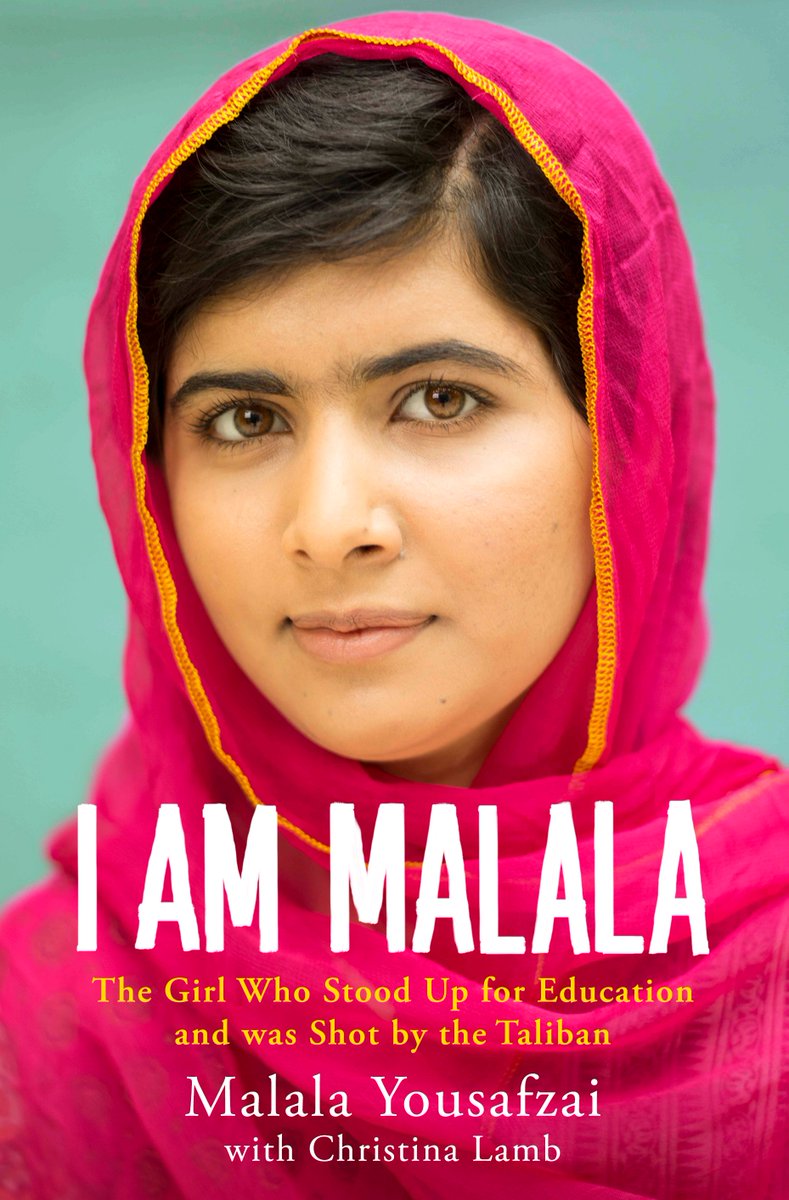
Later that year, she published her first book. An
autobiography entitled "I Am Malala: The Girl Who Stood Up for Education
and Was Shot by the Taliban".
On the 10th of October 2013, the
European Parliament awarded Malala with the prestigious Sakharov Prize for Freedom of Thought in acknowledgement of her work.

Although Malala's greatest legacy from 2013 is the namesake organisation [Malala Fund] she (along with her father) established. The organisation globally advocates for the millions of girls being denied a formal education. Due to social, economic, legal and political factors.
It's also their hope that the Fund empowers girls to raise their voices, to achieve their potential and to demand change. Making them become more confident, hopefully making them into strong leader in their own countries.
The organisation is responsible for funding education projects in six countries around the world, and is working with international leaders to change the lives of millions of girls around the world. The Malala Fund also joins forces with local partners, in order to invest in innovative solutions on the ground. While advocating globally for quality secondary education for all girls.

Exactly two years (on the 10th of October 2014) after receiving the Sakharov Prize for Freedom of Thought, Malala along with Indian children's education and rights activist Kailash Satyarthi were awarded the Nobel Peace Prize.
Which as it says on the Nobel Prize website they won it "for their struggle against the suppression of children and young people and for the right of all children to education".
Making her the youngest ever Nobel Prize winning laureate, being only seventeen year old at the time.
Malala contributed her entire prize money of more than $500,000 to financing the creation of a Pakistani secondary school for girls.
Accepting the award, Malala reaffirmed that "This award is not just for me. It is for those forgotten children who want education. It is for those frightened children who want peace. It is for those voiceless children who want change".
From her home in Birmingham (United Kingdom), Malala's still an active
advocate for education as a fundamental social and economic right worldwide.
Which she is hope to achieve through the
work of the Malala Fund and with her own voice. She remains a staunch advocate
for the power of education, and for girls to become the felicitators of change in their
counties and communities across the world.
Before I wrote this Blog post, I was only aware of Malala's achievements.
But since I've researched her life... she's become so much more of an incredibly inspirational person to me. As considering what she's been through, she's had quite an eventful life for a twenty year old (at the time that I write this).


When I've spoken to Jamie and Phil about Malala (and this Blog post in general) I've described her as a 'modern day Anne Frank'.
As when she wrote her BBC Urdu Blog (modern day Diary), she wrote it because she was afraid of what was happening with the Taliban. Trying to use it as a form of escapism... much like Anne Frank did (with her Diary) back in the Second World War. When she (and her family) were hiding from Germans.
With neither one realising what kind of impact their words would have on the world.
It's her determination to fight for what she believes in (a child's right for education), which makes her such an inspiration to me. I also think that the parallels you can draw between the two of them (Anne and Malala) is striking.
As I've said throughout this Blog post, I find it's incredible just how much she'd achieved at such a young age (obviously with a lot more good still to do!). But most important of all I also think that she's the sort of role model young women need.
Mainly due to the fact that she cares enough to promote the idea of substance over style to women across the world. Once again, challenging the foundations of societal expectations forced upon women worldwide.
I hope you've enjoyed reading the first part of this Blog post, just as much as I've enjoyed finally finishing it. As I said at the beginning of this Blog post, I hope it's given you yet another insight into who I am as person.
But I know it's only part of the picture, so I'll now move on to the (problematic) second part, which will at least include (with possibly a third name):
This is Simon from The Engage Podcast signing out!
But I know it's only part of the picture, so I'll now move on to the (problematic) second part, which will at least include (with possibly a third name):
Nelson Mandela- Anti-apartheid revolutionary
Anne (& Otto) Frank- Anti fascists
Which I'm hoping to release it before Christmas (if all goes well). So keep an eye out for that!!!
This is Simon from The Engage Podcast signing out!


